
Importance of Geotextile in Road Construction
Road construction projects require durable, stable, and cost-effective solutions to withstand traffic loads, environmental conditions, and long-term wear. One of the most important materials used in modern road engineering is geotextile. Geotextiles play a crucial role in improving road performance, extending pavement lifespan, and reducing maintenance costs.
In this article, we will explore the importance of geotextile in road construction, its functions, benefits, types, and applications.
What is Geotextile?
Geotextile is a permeable synthetic textile material commonly made from polypropylene or polyester fibers. It is widely used in civil engineering and infrastructure projects to improve soil stability, drainage, filtration, and reinforcement.
Geotextiles are generally divided into two main categories:
- Woven geotextiles
- Non-woven geotextiles
Both types are designed to perform specific engineering functions depending on the road construction requirements.
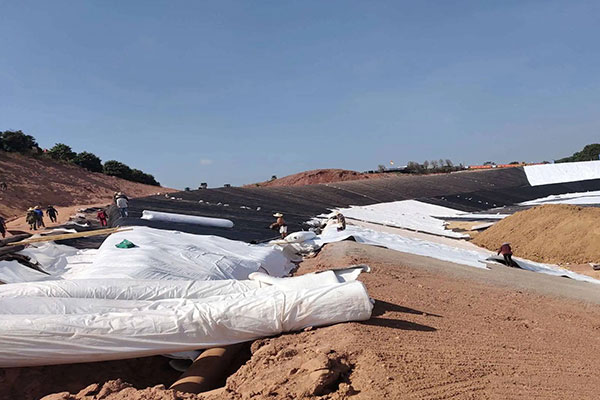
Why Geotextile is Important in Road Construction
Roads are constantly exposed to heavy traffic, moisture, temperature changes, and soil movement. Without proper ground stabilization, roads can crack, rut, or fail prematurely. Geotextiles provide an effective solution by enhancing the interaction between soil and pavement layers.
1. Soil Stabilization and Reinforcement
One of the primary functions of geotextile is soil reinforcement. Weak subgrade soils can lead to uneven settlement and pavement failure. By placing geotextile between the soil and aggregate layers, the load is distributed more evenly.
Benefits include:
- Improved bearing capacity
- Reduced deformation
- Better load distribution
- Increased road durability
This is especially important in areas with soft clay, sandy soils, or wet ground conditions.
2. Separation of Road Layers
In road construction, geotextiles act as a separator between the subgrade soil and the aggregate base layer. Without separation, fine soil particles can migrate upward into the aggregate, causing contamination and weakening the road structure.
Geotextile separation helps:
- Prevent mixing of materials
- Maintain aggregate thickness
- Improve structural integrity
- Reduce maintenance frequency
This function significantly extends the service life of roads.
3. Enhanced Drainage Performance
Water is one of the biggest causes of road damage. Excess moisture weakens the soil foundation and accelerates pavement deterioration.
Geotextiles provide excellent drainage and filtration properties by allowing water to pass through while retaining soil particles.
Advantages include:
- Faster water dissipation
- Reduced water pressure buildup
- Prevention of soil erosion
- Improved pavement stability
Proper drainage helps prevent potholes, cracks, and surface failures.
4. Erosion Control
Road embankments, slopes, and shoulders are vulnerable to erosion caused by rainfall and runoff. Geotextiles help stabilize soil surfaces and reduce erosion risks.
Applications include:
- Highway slopes
- Drainage channels
- Retaining wall systems
- Riverbank protection near roads
By controlling erosion, geotextiles improve both road safety and environmental protection.
5. Reduction in Construction Costs
Using geotextile can significantly reduce overall construction and maintenance costs.
Cost-saving benefits include:
- Reduced aggregate requirements
- Faster construction time
- Lower maintenance expenses
- Extended pavement lifespan
Although geotextile adds an initial material cost, the long-term savings are substantial due to improved road performance.
6. Increased Road Lifespan
Roads constructed with geotextile reinforcement generally last longer than conventional roads. The material helps maintain structural integrity under heavy traffic loads and harsh weather conditions.
Long-term benefits include:
- Reduced rutting
- Fewer cracks
- Better resistance to deformation
- Lower lifecycle costs
This makes geotextile an essential component in modern highway and infrastructure projects.
Applications of Geotextile in Road Construction
Geotextiles are widely used in various road-related applications, including:
- Highways and Expressways: Heavy traffic highways require strong load-bearing structures. Geotextiles improve subgrade stability and pavement performance.
- Rural Roads: In rural or low-bearing-capacity areas, geotextiles help stabilize weak soils and reduce maintenance requirements.
- Temporary Construction Roads: Construction sites often require temporary access roads over unstable ground. Geotextiles provide quick and effective reinforcement.
- Airport Runways: Runways demand high structural stability and drainage performance, making geotextiles a valuable solution.
- Railway Infrastructure: Geotextiles are also used in railway track stabilization and ballast separation.
Conclusion
Geotextiles have become an indispensable material in modern road construction. Their ability to reinforce soil, separate layers, improve drainage, and control erosion greatly enhances road performance and durability. By using geotextiles, contractors and engineers can build stronger, longer-lasting roads while reducing maintenance costs and improving environmental sustainability.