
The Role of Geomembranes in Tailings Storage Facilities
Tailings facilities are among the most critical and environmentally sensitive components of mining operations. They store the byproducts of ore processing—finely ground rock mixed with process water and chemicals. Without proper containment, tailings can pose serious risks to soil, groundwater, and surrounding ecosystems.
One of the most effective engineering solutions for safe containment is the use of geomembranes. These high-performance synthetic liners play a vital role in preventing leakage, improving stability, and ensuring compliance with environmental regulations.
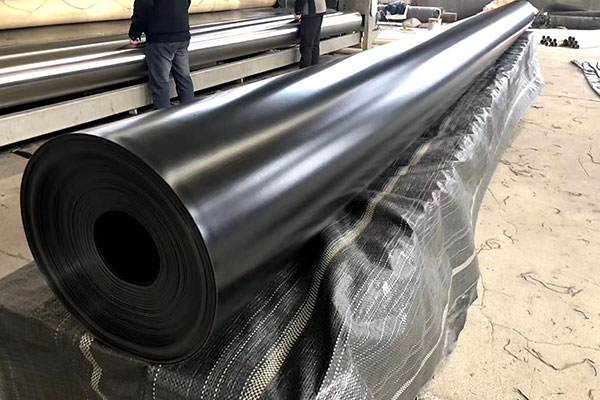
What Are Geomembranes?
Geomembranes are low-permeability synthetic membranes used as barrier liners. They are typically manufactured from materials such as:
- High-Density Polyethylene (HDPE)
- Linear Low-Density Polyethylene (LLDPE)
- Polyvinyl Chloride (PVC)
- Ethylene Propylene Diene Monomer (EPDM)
Among these, HDPE geomembranes are the most widely used in mining due to their excellent chemical resistance, durability, and long service life.
Their primary function is simple but critical: to prevent fluid migration between the tailings and the surrounding environment.
Why Tailings Facilities Need Geomembranes
Tailings storage facilities contain potentially hazardous materials, including heavy metals and processing chemicals. Without a reliable barrier system, these substances can seep into groundwater or nearby waterways.
Geomembranes address several key risks:
1. Environmental Protection
Geomembranes prevent seepage of contaminated water into soil and groundwater systems, significantly reducing environmental impact.
2. Chemical Resistance
Mining tailings often contain acidic or alkaline solutions. HDPE geomembranes resist chemical degradation, maintaining integrity over long periods.
3. Structural Stability
When integrated into composite lining systems, geomembranes help improve the overall stability of tailings dams and ponds.
4. Regulatory Compliance
Many mining jurisdictions now require engineered liners to meet strict environmental protection standards.
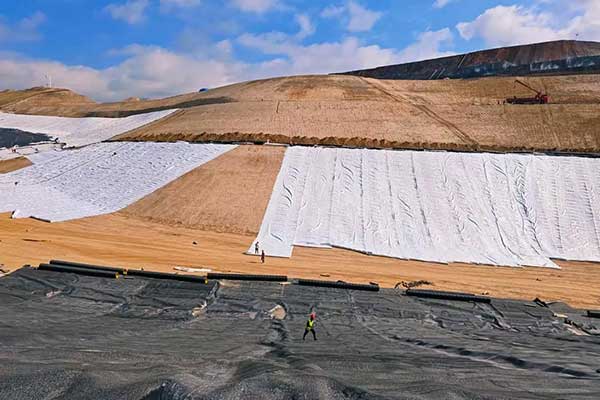
Applications of Geomembranes in Tailings Facilities
Geomembranes are used in multiple areas of tailings management systems, including:
- Tailings Storage Ponds: Installed at the base and side slopes to create an impermeable barrier.
- Tailings Dams: Used within dam cores, upstream liners, or downstream containment layers.
- Heap Leach Pads: Protect underlying soil and groundwater from leachate infiltration.
- Water Recovery Systems: Line ponds and channels used for reclaiming process water from tailings.
Common Geomembrane Systems in Tailings Facilities
Tailings facilities rarely rely on geomembranes alone. Instead, they are part of engineered composite systems, such as:
- Single-Layer Geomembrane System: Used in low-risk or temporary containment areas.
- Composite Liner System: Combines a geomembrane with a compacted clay liner (CCL) or geosynthetic clay liner (GCL) for enhanced protection.
- Double Liner System: Two geomembranes separated by a leak detection layer for maximum environmental security—often used in high-risk mining operations.
Installation Process Overview
A typical geomembrane installation in a tailings facility involves:
- Site grading and compaction
- Placement of protective geotextile layer (if required)
- Rolling out geomembrane sheets
- Welding seams in the field
- Quality inspection and leak testing
- Covering with protective layers or tailings material
Proper installation is just as important as material selection in ensuring system performance.
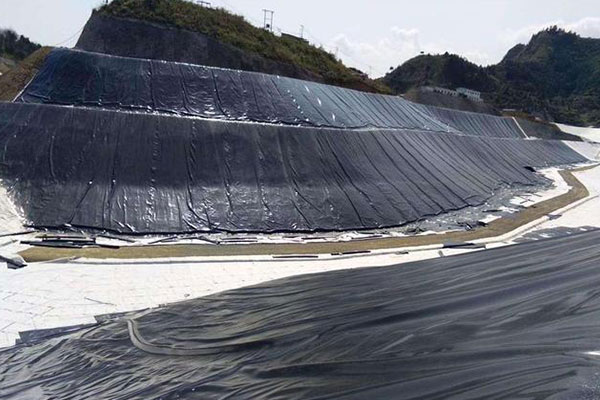
Advantages of Geomembranes in Tailings Management
Geomembranes provide several long-term benefits:
- Extremely low permeability
- High tensile strength and puncture resistance
- Resistance to UV exposure and weathering (when stabilized)
- Long service life (often 20–50 years depending on conditions)
- Cost-effective compared to traditional clay liners in many regions
Challenges and Design Considerations
While geomembranes are highly effective, proper engineering design is essential:
- Thermal expansion and contraction in large exposed areas
- Differential settlement in tailings dams
- Seam integrity over time
- UV exposure in uncovered systems
- Mechanical damage during construction and operation
These risks are managed through correct material selection, installation practices, and ongoing monitoring.
Conclusion
Geomembranes are now a fundamental element in modern tailings facilities, providing reliable containment, environmental protection, and long-term cost savings. As mining operations expand and environmental regulations tighten, the importance of high-performance geomembrane systems will continue to grow.