
Non Woven Geotextile Fabric for Drainage
Water is one of the biggest threats to the stability of roads, foundations, retaining walls, landscaping, and civil engineering projects. Without proper drainage, excess moisture can weaken soil, reduce load-bearing capacity, and lead to erosion or structural failure. Non woven geotextile fabric for drainage has become an essential material for engineers, contractors, and property owners looking to build durable drainage systems.
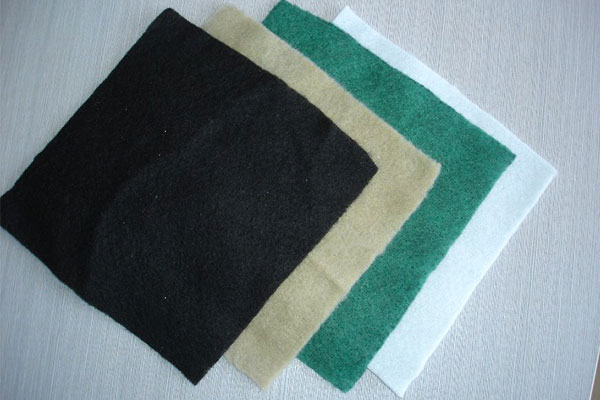
What is Non Woven Geotextile Fabric?
Non woven geotextile fabric is a permeable synthetic textile manufactured by bonding polypropylene or polyester fibers together through needle punching or heat treatment rather than weaving.
Unlike woven geotextiles that primarily provide reinforcement, non-woven geotextiles excel at filtration, drainage, and separation, making them ideal for water management applications.
Key characteristics include:
- High water permeability
- Excellent filtration performance
- Strong puncture resistance
- Good tensile strength
- Resistance to chemicals, mold, and UV degradation
- Long service life
How Does Non Woven Geotextile Fabric Work in Drainage?
The fabric functions as a filter layer between soil and drainage aggregate.
Water flows freely through the fabric while fine soil particles are retained. This prevents drainage systems from becoming clogged over time.
The drainage process typically works as follows:
- Rainwater enters the surrounding soil.
- Water passes through the geotextile.
- Soil particles remain outside the fabric.
- Water reaches gravel or drainage pipes.
- Water is safely discharged.
This simple mechanism significantly extends the lifespan of drainage systems.
Benefits of Using Non Woven Geotextile Fabric for Drainage
Excellent Filtration
The fabric allows water to pass while blocking soil particles, maintaining efficient drainage for years.
Prevents Clogging
Without filtration, gravel drains and perforated pipes gradually fill with sediment. Non-woven geotextile prevents this problem.
Improves Drainage Efficiency
By maintaining clean drainage layers, water can move quickly away from structures and landscapes.
Soil Separation
The fabric prevents mixing between native soil and drainage aggregate, preserving the performance of the drainage system.
Erosion Control
It stabilizes soil while allowing water movement, reducing erosion on slopes and embankments.
High Durability
Manufactured from polypropylene or polyester, non woven geotextiles resist:
- Rot
- Biological degradation
- Chemicals
- Most acids and alkalis
- Microorganisms
Common Applications
1. French Drains
One of the most common applications is wrapping gravel-filled French drains.
Benefits include:
- Preventing soil intrusion
- Maintaining long-term drainage
- Reducing maintenance
2. Foundation Drainage
Installed around building foundations, the fabric protects drainage pipes and helps keep basements dry.
Applications include:
- Residential buildings
- Commercial structures
- Warehouses
- Industrial facilities
3. Retaining Walls
Behind retaining walls, non woven geotextiles:
- Filter groundwater
- Prevent soil migration
- Reduce hydrostatic pressure
4. Road Construction
Road engineers use non woven geotextiles to:
- Separate subgrade and aggregate
- Improve drainage
- Extend pavement life
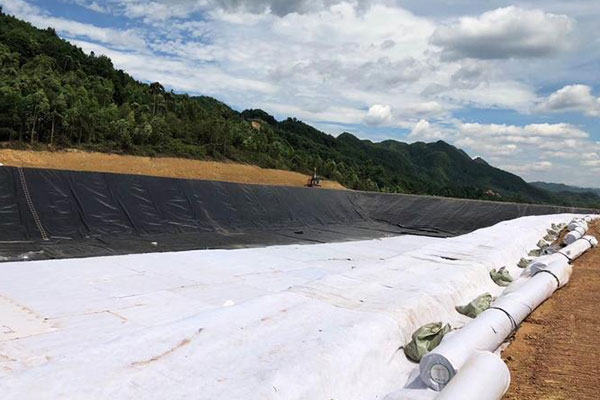
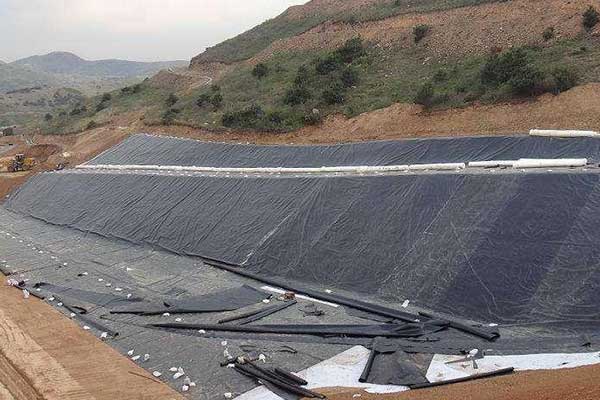
5. Landfills
Drainage layers in landfill systems often use non-woven geotextile for filtration and liquid collection.
6. Sports Fields
Sports facilities require efficient subsurface drainage.
Applications include:
- Football fields
- Golf courses
- Baseball fields
- Tennis courts
7. Landscaping
Landscape professionals install geotextiles beneath decorative stone and drainage systems to improve water flow and reduce maintenance.
Non Woven vs Woven Geotextile for Drainage
| Feature | Non Woven Geotextile | Woven Geotextile |
|---|---|---|
| Water Permeability | Excellent | Moderate |
| Filtration | Excellent | Limited |
| Drainage | Excellent | Fair |
| Soil Separation | Excellent | Good |
| Reinforcement | Moderate | Excellent |
| Best Use | Drainage Systems | Road Reinforcement |
For projects where water movement is the primary concern, non-woven geotextile is generally the preferred choice.
Types of Non Woven Geotextile Fabric
Needle Punched Non Woven Geotextile
Manufactured by mechanically interlocking fibers.
Advantages:
- High permeability
- Good flexibility
- Excellent filtration
Commonly used for:
- Drainage
- Roads
- Railways
- Erosion control
Heat Bonded Non Woven Geotextile
Produced using thermal bonding.
Characteristics:
- Smooth surface
- Higher strength
- Lower permeability than needle-punched products
Suitable for specific filtration and separation applications.
Choosing the Right Non Woven Geotextile
Several factors should be considered.
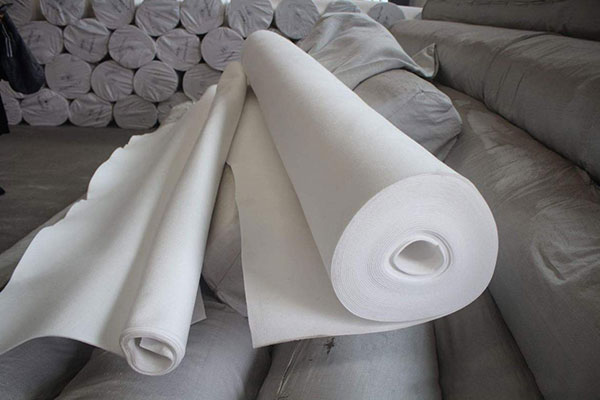
1. Fabric Weight
Common weights include:
- 100 gsm
- 150 gsm
- 200 gsm
- 250 gsm
- 300 gsm
- 400 gsm
- 500 gsm
- 600 gsm
Heavier fabrics generally offer:
- Better puncture resistance
- Higher durability
- Greater strength
2. Water Flow Rate
The fabric should provide sufficient permeability to handle expected water flow.
3. Apparent Opening Size (AOS)
AOS determines how effectively the fabric filters soil particles.
The appropriate opening size depends on soil type.
4. Tensile Strength
Projects with heavy loads require stronger fabrics.
5. UV Resistance
Outdoor installations should use UV-stabilized geotextiles when prolonged sunlight exposure is expected before burial.
Installation Guidelines
Proper installation is essential for optimal performance.
- Step 1: Prepare the ground by removing sharp rocks and debris.
- Step 2: Lay the geotextile fabric smoothly without wrinkles.
- Step 3: Overlap adjacent sheets by 300–600 mm, depending on project requirements.
- Step 4: Place drainage aggregate carefully to avoid damaging the fabric.
- Step 5: Install drainage pipes if required.
- Step 6: Cover with backfill and compact appropriately.
Frequently Asked Questions
Yes. Non-woven geotextiles offer superior water permeability and filtration, making them the preferred choice for most drainage applications.
When properly installed and protected from prolonged UV exposure, high-quality polypropylene or polyester non-woven geotextiles can perform effectively for several decades in underground applications.
Yes. It helps stabilize soil while allowing water to drain, making it effective for erosion control applications.
No. It is water permeable, allowing water to pass through while filtering out soil particles.
The appropriate weight depends on your application. Lightweight fabrics (100–200 gsm) are suitable for landscaping, while heavier fabrics (300–600 gsm or more) are recommended for road construction, retaining walls, and heavy-duty civil engineering projects.
Conclusion
Non woven geotextile fabric for drainage is a proven solution for filtration, separation, and water management in residential, commercial, and infrastructure projects. By allowing water to flow freely while preventing soil migration, it protects drainage systems from clogging, extends service life, and reduces maintenance costs.