
Polypropylene Non-Woven Geotextile: Uses and Applications
Polypropylene non-woven geotextile is widely used in roads, drainage systems, retaining walls, landfills, ponds, and other civil engineering projects. Made from polypropylene fibers, it combines good water permeability with filtration, separation, and protection performance.
Because it is flexible, lightweight, and easy to install, polypropylene non-woven geotextile is suitable for both small construction projects and large infrastructure works.
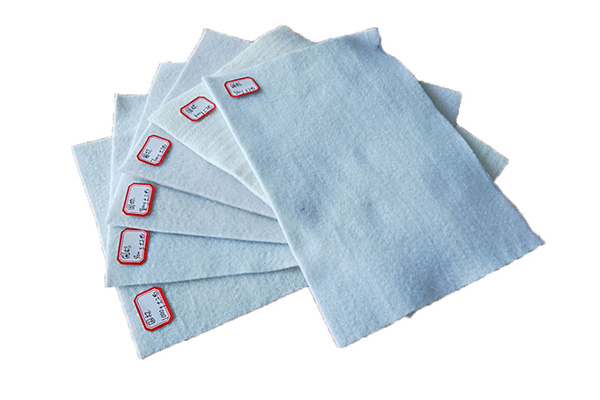
What is Polypropylene Non-Woven Geotextile?
Polypropylene non-woven geotextile is a permeable fabric made from polypropylene fibers. The fibers are randomly arranged and usually bonded by needle punching to form a stable three-dimensional structure.
Unlike woven geotextile, it does not have a regular woven pattern. This structure gives non-woven geotextile good permeability and allows it to adapt well to uneven ground.
Depending on the project, it can perform several functions at the same time.
How Does Polypropylene Non-Woven Geotextile Work?
The main purpose of polypropylene non-woven geotextile is to control the movement of soil and water between different construction layers.
Filtration
The small openings between the fibers allow water to pass through while helping retain soil particles.
This is especially useful in drainage systems, where water needs to move freely without washing soil into drainage aggregates or pipes.
Separation
When installed between soil and aggregate, the geotextile helps prevent the two materials from mixing.
For example, placing it between a road subgrade and gravel base can help maintain the thickness and performance of the aggregate layer.
Drainage
The fiber structure allows water to move through and, in some applications, along the geotextile.
This helps remove excess water from roads, retaining walls, slopes, and other structures.
Protection
Polypropylene non-woven geotextile can also act as a cushioning layer.
When installed with an HDPE geomembrane, it helps reduce damage from stones, rough soil, or aggregate during installation and service.
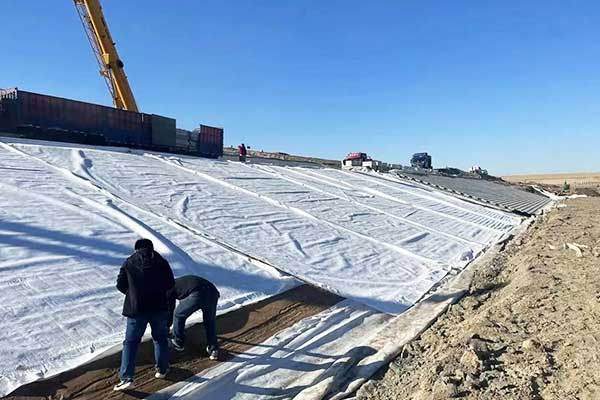
Where is Polypropylene Non-Woven Geotextile Used?
Polypropylene non-woven geotextile can be used in many geotechnical and construction applications.
Road Construction
In road projects, geotextile is commonly placed between soft subgrade and aggregate. It helps prevent soil contamination of the base layer while allowing water to drain through the structure.
Drainage Systems
Non-woven geotextile is often wrapped around drainage pipes or used around gravel drainage layers. Its filtration function helps keep fine soil particles out of the drainage system.
Retaining Walls
Behind retaining walls, geotextile can help filter soil while allowing water to reach the drainage layer. This can reduce water buildup behind the wall.
Pond and Landfill Liners
Heavier non-woven geotextiles are often installed above or below geomembranes to provide puncture protection.
Erosion Control
The material can also be installed under riprap, stones, or other erosion-control materials along slopes, riverbanks, and channels.
How to Select the Right Polypropylene Non-Woven Geotextile
Start by identifying the main function of the geotextile.
If the project mainly requires filtration, pay attention to permeability and AOS.
For road separation, tensile strength, puncture resistance, and installation durability are important.
For geomembrane protection, heavier GSM, thickness, and puncture resistance normally become more important.
Before ordering, it is useful to confirm:
- Weight in g/m²
- Tensile strength
- Elongation
- Puncture resistance
- Water permeability
- AOS
- Roll dimensions
- Required project standards
Geotextile selection should consider more than just GSM, including strength, permeability, and puncture resistance.
Conclusion
Now you have a clear idea of how polypropylene non-woven geotextile works and why it is used in so many civil engineering projects. It can provide filtration, separation, drainage, and protection in applications ranging from roads and retaining walls to ponds and drainage systems.
Choosing the right product depends on more than just GSM. Strength, permeability, puncture resistance, AOS, and actual site conditions should all be considered before selection.
For bulk orders or project-specific polypropylene non-woven geotextile specifications, contact us for product details and technical support.