
Geotextile Fabric Under Gravel: Uses and How to Install It
Gravel can sink into soft soil, while fine soil particles can move upward into the gravel layer. Geotextile fabric under gravel creates a permeable barrier between the two materials. It helps keep the gravel layer separate from the ground beneath it while allowing water to pass through.
Geotextile is used beneath gravel driveways, access roads, paths, and drainage layers. The right fabric depends on the soil, expected traffic, and the purpose of the gravel.
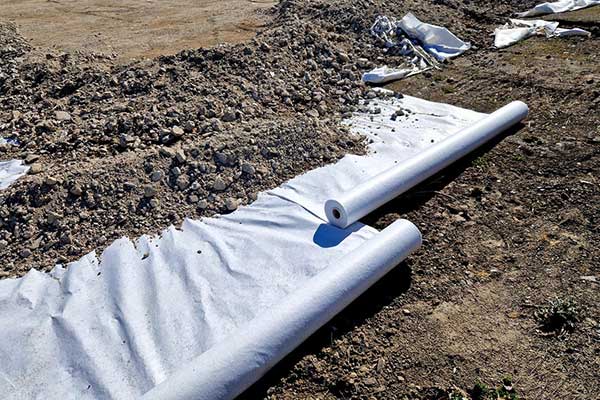
Why Put Geotextile Fabric Under Gravel?
The main reason is separation. When gravel is placed directly on soft or wet soil, the materials can mix during installation and use. As a result, the effective gravel layer becomes thinner and may need more frequent maintenance.
A suitable geotextile helps:
- Keep soil and gravel in separate layers
- Reduce the movement of fine soil into the gravel
- Preserve the thickness of the gravel layer
- Support more consistent drainage where a permeable gravel layer is part of the design
Geotextile can improve the performance of a gravel layer, but it cannot correct poor grading, inadequate drainage, or an insufficient gravel depth.
Where is Geotextile Fabric Used Under Gravel?
| Application | Main purpose of the fabric |
|---|---|
| Gravel driveways | Separates the gravel base from the underlying soil |
| Temporary access roads | Helps prevent gravel from mixing with soft subgrade soil |
| Garden paths | Keeps the gravel and soil layers separate |
| Patio bases | Separates the compacted aggregate base from the ground below |
| Drainage layers | Helps prevent surrounding soil from entering the gravel |
A garden path and a road carrying heavy vehicles place very different demands on the fabric. Choose a geotextile for the actual application rather than using the same product everywhere.
Woven or Nonwoven Geotextile: Which Is Better Under Gravel?
Both types can be used beneath gravel, provided their properties meet the project requirements.
Woven geotextile is often selected for separation beneath gravel driveways and access roads where installation strength matters. Its filtration properties still need to suit the soil and drainage conditions.
Nonwoven geotextile is commonly used where filtration and water flow are priorities, such as drainage layers. It can also serve as a separation layer when properly specified.
Neither type is automatically the best choice for every site. For weak, wet ground or heavy traffic, the complete gravel base and any required stabilization should be designed together.
How to Choose Geotextile Fabric for Gravel
Before ordering, consider these factors:
- Ground conditions: Soft clay, silt, and firm, well-drained soil behave differently beneath a gravel layer.
- Traffic loads: A pedestrian path needs a different installation strength from a driveway or construction access road.
- Drainage requirements: The fabric should let water pass while limiting the movement of soil particles.
- Gravel size and placement method: Coarse aggregate and construction equipment can damage fabric that is too light for the installation.
- Project specifications: Check the required product test data, roll size, and installation instructions.
Do not select fabric by weight alone. Strength, opening size, and water flow properties also affect its suitability.
How to Install Geotextile Fabric Under Gravel
The exact method should follow the project design, but the basic steps are:
- Prepare the ground: Remove vegetation, debris, and sharp objects. Grade the area so water can drain as intended.
- Repair soft spots: Address unstable areas before covering them with fabric.
- Roll out the geotextile: Place it directly over the prepared ground without excessive wrinkles.
- Overlap adjoining rolls: Use the overlap required by the design or product installation guidance. Avoid gaps that allow soil to mix with the gravel.
- Place the gravel carefully: Keep construction equipment off exposed fabric and avoid dropping aggregate in a way that tears it.
- Spread and compact the gravel: Build the specified layer thickness and finish the surface to the required grade.
If the fabric is punctured or displaced during installation, repair the affected area before covering it.
Conclusion
Geotextile fabric under gravel helps maintain a clear boundary between the gravel and the soil below. It is especially useful where soft or fine-grained soil could mix with the aggregate. Good results depend on choosing a fabric suited to the ground conditions, installing it without damage, and building an adequate gravel layer above it.
Shelter supplies geotextiles for gravel roads, driveways, paths, and drainage projects. Contact us with your application and project requirements to discuss a suitable product.