
Uniaxial Geogrid: Everything You Need to Know
Uniaxial geogrid is one of the most widely used geosynthetic materials in modern civil engineering, especially in soil reinforcement and slope stabilization projects. It is designed to provide high tensile strength in one primary direction, making it highly effective for retaining walls, steep slopes, and embankment reinforcement.
What is Uniaxial Geogrid?
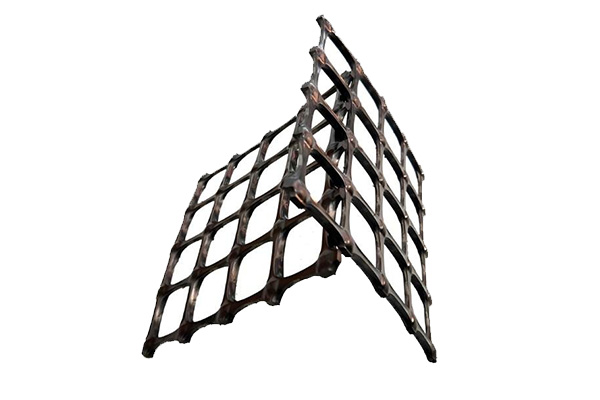
A uniaxial geogrid is a type of geosynthetic reinforcement material manufactured from high-density polyethylene (HDPE), polypropylene, or polyester. It features a grid-like structure with elongated apertures and strong ribs oriented in one direction.
Unlike biaxial geogrids (which provide strength in both directions), uniaxial geogrids are engineered to resist tensile forces primarily in a single direction—typically the machine direction.
This makes them ideal for applications where lateral earth pressure is significant and reinforcement is required in one dominant load direction.
How Uniaxial Geogrid Works
The performance of uniaxial geogrid relies on soil–structure interaction:
- Soil particles interlock within the grid apertures
- The geogrid restricts lateral soil movement
- Tensile forces are transferred from soil to the geogrid
- The reinforced soil mass becomes more stable and load-bearing
This mechanism significantly improves the stability of weak soil structures and reduces deformation over time.
Key Features of Uniaxial Geogrid
Uniaxial geogrids are engineered with several important properties:
- High tensile strength in one direction
- Excellent creep resistance under long-term loads
- Strong chemical and biological resistance
- UV stability for outdoor exposure
- High junction efficiency for load transfer
- Durable performance in harsh soil conditions
These characteristics make it suitable for long-term infrastructure projects.
Main Applications of Uniaxial Geogrid
1. Retaining Walls
Uniaxial geogrids are widely used in mechanically stabilized earth (MSE) retaining walls. They reinforce soil backfill and allow the construction of steep or vertical walls with improved stability.
2. Steep Slopes
For highway embankments and hillside developments, uniaxial geogrids help stabilize steep slopes and reduce the risk of landslides.
3. Road Embankments
They are used to reinforce road foundations built on soft or weak subgrade soils, improving load distribution and reducing settlement.
4. Bridge Abutments
Uniaxial geogrids enhance the structural integrity of bridge approach embankments, reducing differential settlement between bridge decks and roadways.
5. Landfill Reinforcement
They are used in landfill construction to stabilize soil layers and ensure structural safety under heavy loads.
Advantages of Using Uniaxial Geogrid
- Improved Soil Stability: By reinforcing soil layers, uniaxial geogrids significantly enhance slope and wall stability.
- Cost-Effective Solution: They reduce the need for expensive concrete retaining structures and deep foundations.
- Faster Construction: Installation is simple and quick compared to traditional reinforcement methods.
- Long Service Life: High-quality geogrids can perform effectively for decades without significant degradation.
- Reduced Maintenance: Once installed, they require minimal maintenance, lowering lifecycle costs.
Uniaxial vs Biaxial Geogrid
Understanding the difference is essential when selecting the right material:
| Feature | Uniaxial Geogrid | Biaxial Geogrid |
|---|---|---|
| Strength direction | One direction | Two directions |
| Primary use | Walls, slopes | Road base reinforcement |
| Load type | Tensile (vertical structures) | Distributed loads |
| Soil interaction | Deep anchorage | Surface stabilization |
If your project involves vertical or near-vertical soil structures, uniaxial geogrid is the better choice.
Materials and Manufacturing
Most uniaxial geogrids are made from:
- HDPE (High-Density Polyethylene): Excellent durability and chemical resistance
- PP (Polypropylene): Lightweight and cost-efficient
- PET (Polyester): High tensile strength and creep resistance
Manufacturing typically involves extrusion, punching, stretching, and orientation processes to align polymer chains for maximum tensile performance.
Installation Overview
Proper installation is critical for performance:
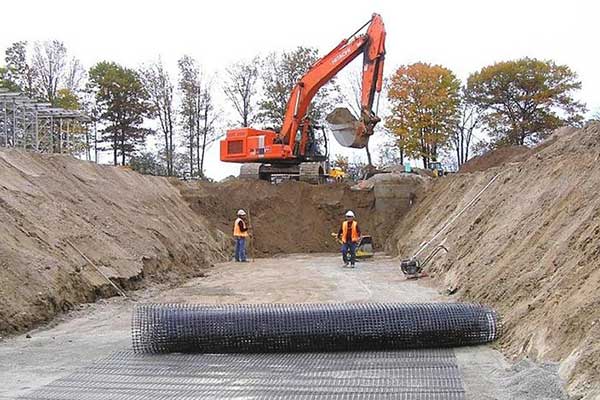
- Prepare and level the foundation soil
- Place geogrid in the designed direction (strength direction aligned with load)
- Overlap adjacent rolls if required
- Fill with compacted soil or aggregate
- Repeat layer-by-layer for multi-tier reinforcement systems
Correct compaction and alignment ensure optimal load transfer and structural stability.
Selection Tips for Engineers and Contractors
When choosing a uniaxial geogrid, consider the following:
- Required tensile strength (kN/m)
- Soil type and bearing capacity
- Height of retaining structure
- Environmental conditions (UV exposure, chemical exposure)
- Long-term creep resistance requirements
- Project design life (e.g., 50–100 years)
Working with a reliable supplier is also essential to ensure quality consistency and compliance with engineering standards.
Conclusion
Uniaxial geogrid is an essential material in modern geotechnical engineering. Its ability to reinforce soil in one direction makes it ideal for retaining walls, steep slopes, and embankment stabilization projects.
If you are planning a civil engineering project involving soil reinforcement, choosing a high-quality uniaxial geogrid can significantly improve both safety and long-term performance.