
HDPE Geomembrane vs Concrete Lining: Key Differences
When planning a containment system for ponds, reservoirs, canals, landfills, wastewater facilities, mining sites, or industrial storage areas, two common lining options are HDPE geomembrane and concrete lining. Both materials can create a barrier, but they perform very differently in terms of impermeability, installation speed, cost, durability, and maintenance.
For many modern containment projects, HDPE geomembrane lining offers stronger waterproofing performance and better cost efficiency, while concrete lining may still be useful where structural rigidity, traffic support, or hard-surface access is required.
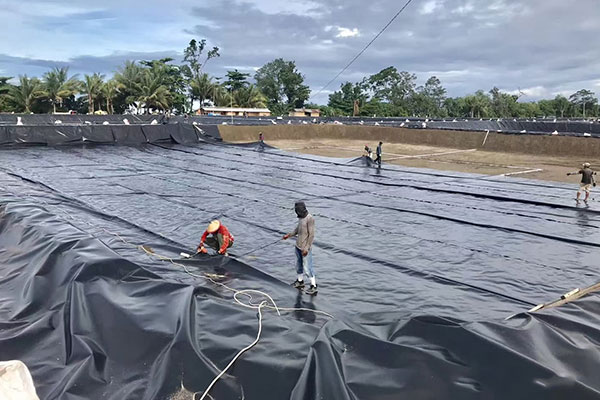
What is HDPE Geomembrane?
HDPE geomembrane is a high-density polyethylene liner used as an impermeable barrier in environmental and civil engineering projects. It is usually supplied in rolls and welded on-site to form a continuous lining system.
Common applications include:
- Wastewater treatment ponds
- Fish ponds and aquaculture farms
- Landfill liners and covers
- Mining heap leach pads
- Irrigation canals
- Reservoirs and artificial lakes
- Chemical containment areas
- Biogas digesters
HDPE geomembrane is known for its excellent chemical resistance, low permeability, UV resistance, and long service life.
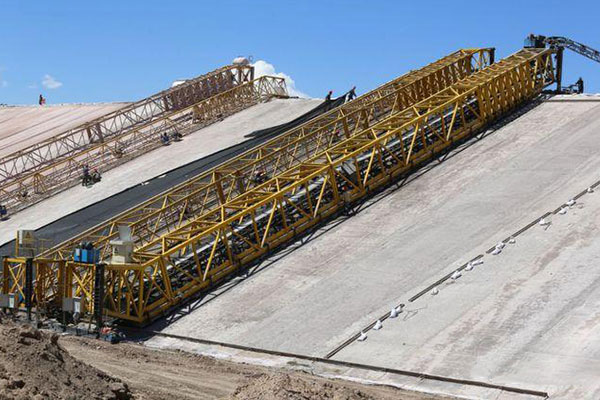
What is Concrete Lining?
Concrete lining uses poured or precast concrete to form a hard containment surface. It is often used in canals, water channels, reservoirs, tanks, drainage systems, and industrial structures.
Concrete provides strength and rigidity, but it is not naturally waterproof. Over time, concrete may crack due to settlement, shrinkage, temperature changes, or ground movement. To improve waterproofing, concrete often requires additives, sealants, coatings, waterstops, or additional membrane layers.
HDPE Geomembrane vs Concrete Lining: Key Differences
1. Impermeability
HDPE geomembrane has extremely low permeability, making it highly effective for liquid and gas containment. Properly welded HDPE liners form a continuous waterproof barrier.
Concrete, by contrast, is porous by nature. Even well-built concrete can allow seepage through microcracks, joints, or surface defects. For projects where leakage control is critical, concrete often needs additional waterproofing treatment.
Winner: HDPE geomembrane
2. Crack Resistance
HDPE geomembrane is flexible and can adapt to minor ground movement or settlement. This makes it suitable for ponds, landfills, mining sites, and soft-soil areas.
Concrete is rigid. Once the foundation shifts, concrete can crack, creating leakage paths. Repairing cracks may be difficult, especially in large water containment structures.
Winner: HDPE geomembrane
3. Installation Speed
HDPE geomembrane is faster to install. Large rolls can cover wide areas quickly, and seams are joined using hot wedge welding or extrusion welding.
Concrete lining requires formwork, steel reinforcement in many cases, pouring, leveling, curing, and sometimes waterproof coating. This makes the construction process slower and more labor-intensive.
Winner: HDPE geomembrane
4. Cost
HDPE geomembrane lining usually has a lower total project cost, especially for large-area containment projects. It requires less labor, less heavy construction equipment, and shorter installation time.
Concrete lining generally costs more because of cement, aggregates, reinforcement, labor, curing time, and possible waterproofing systems.
Winner: HDPE geomembrane
5. Durability
Both materials can be durable when properly designed and installed. HDPE geomembrane offers excellent resistance to chemicals, UV exposure, corrosion, and biological degradation.
Concrete has high compressive strength, but it can deteriorate from chemical attack, freeze-thaw cycles, sulfate exposure, erosion, and cracking.
For chemically aggressive environments, such as wastewater, mining, or industrial containment, HDPE geomembrane usually performs better.
Winner: HDPE geomembrane for containment; concrete for structural load-bearing
6. Maintenance
HDPE geomembrane requires relatively low maintenance after installation. If damage occurs, the affected area can usually be patched or welded.
Concrete lining may require regular inspection for cracks, joint failure, surface erosion, and seepage. Repairs can be more complex and costly, especially if water must be drained before maintenance.
Winner: HDPE geomembrane
7. Structural Strength
Concrete has an advantage when structural strength is required. It can support vehicles, heavy equipment, and rigid channels better than exposed geomembrane.
HDPE geomembrane is a barrier material, not a structural material. If traffic or heavy loads are expected, it may need protective layers such as geotextile, soil cover, gravel, or concrete slabs.
Winner: Concrete lining
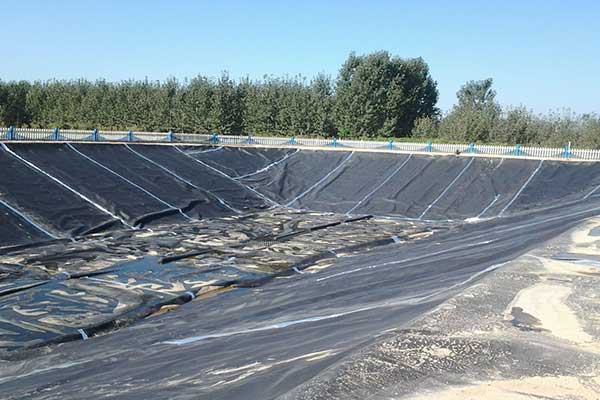
Advantages of HDPE Geomembrane
HDPE geomembrane offers several benefits for containment applications:
- Excellent waterproofing performance
- High chemical resistance
- Flexible and adaptable to ground movement
- Fast installation
- Lower overall project cost
- Long service life
- Suitable for large-area projects
- Resistant to corrosion and biological degradation
- Easy to repair by welding patches
- Effective for both liquid and gas containment
Advantages of Concrete Lining
Concrete lining also has important benefits in the right application:
- Strong and rigid surface
- Good load-bearing capacity
- Suitable for channels, tanks, and access areas
- Resistant to mechanical impact when properly reinforced
- Familiar material for many contractors
- Can be shaped into structural forms
Disadvantages of HDPE Geomembrane
HDPE geomembrane is highly effective, but it must be installed correctly. Poor welding, sharp subgrade materials, or insufficient protection can cause damage.
Potential limitations include:
- Requires professional welding and testing
- Can be punctured by sharp objects if unprotected
- Needs anchoring against wind uplift
- May require cover material in high-traffic areas
Disadvantages of Concrete Lining
Concrete lining has several limitations for waterproofing projects:
- Prone to cracking
- Naturally porous
- Higher construction cost
- Longer installation and curing time
- More difficult to repair
- May require additional waterproof membranes or coatings
- Vulnerable to chemical corrosion in some environments
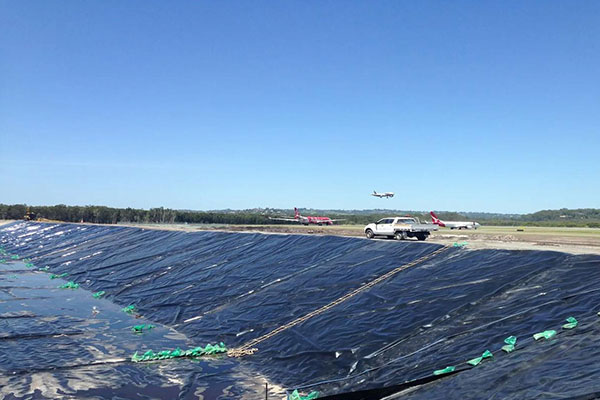
When Should You Choose HDPE Geomembrane?
HDPE geomembrane is usually the better choice when the main goal is waterproofing, seepage control, chemical containment, or environmental protection.
It is especially suitable for:
- Wastewater ponds
- Landfill containment
- Mining leach pads
- Aquaculture ponds
- Irrigation reservoirs
- Evaporation ponds
- Industrial wastewater storage
- Biogas projects
- Anti-seepage canal lining
When Should You Choose Concrete Lining?
Concrete lining may be preferred when the project requires a hard, structural, load-bearing surface.
It is suitable for:
- Drainage channels with high flow velocity
- Areas requiring vehicle access
- Structural tanks
- Channels exposed to heavy mechanical impact
- Projects where rigid geometry must be maintained
In many cases, the best solution is not one material alone. Some projects use HDPE geomembrane beneath concrete to combine waterproofing performance with structural protection.
Conclusion
The comparison between HDPE geomembrane vs concrete lining is not about which material is universally better, but about selecting the right solution for the right application.
Choose HDPE geomembrane for superior waterproofing, chemical resistance, and cost efficiency. Choose concrete lining for structural strength and rigid load-bearing applications
For most modern containment and environmental protection projects, HDPE geomembrane has become the preferred choice due to its performance and economic advantages.