
How is Soil Reinforcement Performed Using Geogrids?
Soil reinforcement using geogrids has become one of the most effective modern ground improvement techniques in civil engineering, road construction, and infrastructure development. It improves soil strength, enhances load-bearing capacity, and reduces deformation in weak subgrades.
In this article, we explain how soil reinforcement is performed using geogrids, the step-by-step construction process, key benefits, and common applications.
What is a Geogrid?
A geogrid is a geosynthetic material used to reinforce soils and other construction materials. It is typically made from high-strength polymers such as polypropylene or polyester and designed in a grid-like structure that interlocks with soil particles.
Unlike geotextiles that mainly separate or filter, geogrids are specifically designed for tensile reinforcement, making them highly effective in stabilizing weak soil layers.
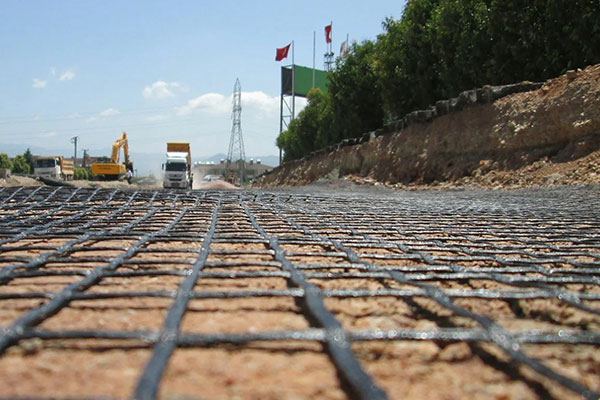
How Soil Reinforcement with Geogrids Works
Soil is naturally strong in compression but weak in tension. Geogrids compensate for this weakness by:
- Interlocking with surrounding soil or aggregate
- Distributing loads over a wider area
- Restricting lateral movement of soil particles
- Increasing shear strength of the soil mass
When traffic loads or structural pressure are applied, the geogrid acts like a tensioned membrane, reducing rutting and settlement.
Step-by-Step Process of Soil Reinforcement Using Geogrids
1. Site Preparation
The ground surface is cleared of vegetation, debris, and unsuitable materials. Weak soil may be leveled or lightly compacted.
2. Subgrade Leveling
A smooth and even subgrade is created to ensure proper geogrid placement and performance.
3. Geogrid Placement
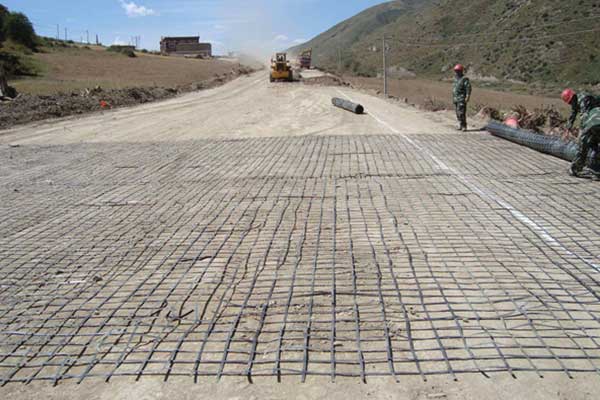
The geogrid is rolled out over the prepared surface. It is laid flat without wrinkles and overlaps are maintained where necessary.
4. Filling with Aggregate or Soil
A layer of granular material (such as crushed stone or gravel) is spread over the geogrid. The aggregate penetrates the grid openings, creating strong mechanical interlock.
5. Compaction
The fill material is compacted using rollers or compactors. This step locks the geogrid and soil together into a reinforced composite layer.
6. Additional Layers (If Required)
For high-load applications like highways or railways, multiple geogrid layers may be installed at different depths.
Benefits of Using Geogrids for Soil Reinforcement
- Improved load-bearing capacity
- Reduced pavement thickness requirement
- Longer service life of roads and structures
- Minimized settlement and rutting
- Cost-effective compared to full soil replacement
- Faster construction process
- Enhanced performance on weak or soft soils
Common Applications
Soil reinforcement using geogrids is widely used in:
- Road and highway construction
- Railway track stabilization
- Retaining walls and steep slopes
- Airport runways
- Industrial yards and container terminals
- Foundation improvement over soft soils
Types of Geogrids Used in Soil Reinforcement
- Uniaxial geogrids – used mainly for retaining walls and slope reinforcement
- Biaxial geogrids – used for road and pavement stabilization
- Triaxial geogrids – offer multi-directional reinforcement for heavy load distribution
Conclusion
Soil reinforcement using geogrids is a highly efficient technique for improving weak ground conditions and supporting heavy structural loads. By combining soil and high-strength polymer grids into a composite system, engineers can significantly enhance stability, reduce construction costs, and extend infrastructure lifespan.
If you are looking to improve weak soil conditions, reduce construction costs, and extend the service life of your infrastructure projects, choosing the right geogrid system is critical. Contact us today to explore Shelter geogrid solutions and find the right reinforcement system for your project needs.