
Geogrid Types: Uniaxial, Biaxial, and Triaxial
Geogrids are one of the most important geosynthetic materials used in modern civil engineering. They are widely applied in road construction, soil stabilization, retaining structures, and foundation reinforcement. Among the different types available, uniaxial, biaxial, and triaxial geogrids are the most commonly used.
Understanding their differences is essential for selecting the right solution for your project, improving load-bearing capacity, and reducing long-term maintenance costs.

What is a Geogrid?
A geogrid is a polymer-based geosynthetic material designed with an open grid-like structure. It is primarily used to reinforce soil by interlocking with aggregates, improving stability and distributing loads more efficiently.
Geogrids are commonly made from:
- High-Density Polyethylene (HDPE)
- Polypropylene (PP)
- Polyester (PET)
They are widely used in:
- Road base reinforcement
- Railway ballast stabilization
- Retaining wall construction
- Embankment reinforcement
- Soft soil foundation improvement
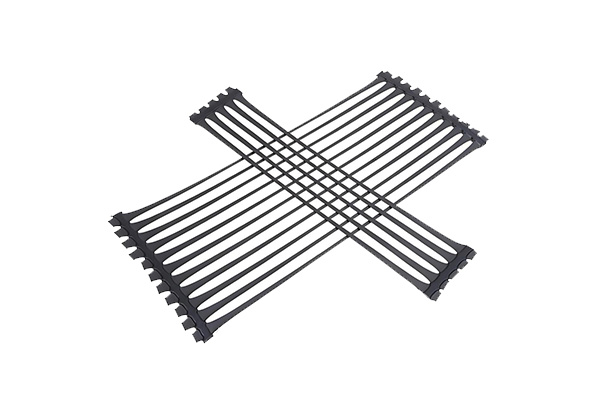
Uniaxial Geogrid
Definition
A uniaxial geogrid is designed with high tensile strength in one primary direction (longitudinal direction). It provides reinforcement mainly in a single axis.
Key Features
- High tensile strength in one direction
- Excellent creep resistance
- Designed for long-term load support
- Typically used in vertical or steep applications
Main Applications
- Retaining walls
- Steep slope reinforcement
- Embankment stabilization
- Landslide prevention structures
Advantages
- Strong reinforcement for vertical structures
- Reduces lateral soil movement
- Improves long-term stability of retaining systems
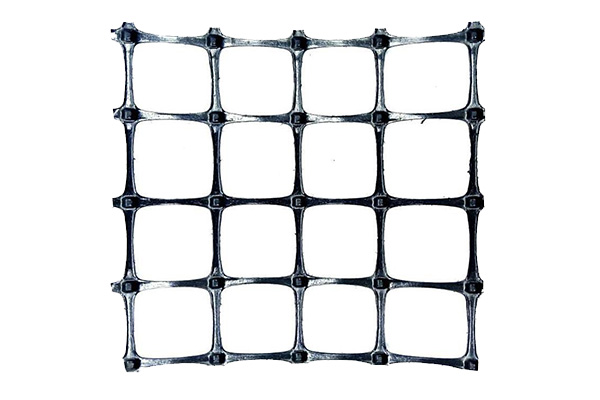
Biaxial Geogrid
Definition
A biaxial geogrid has equal or similar tensile strength in both the longitudinal and transverse directions. It is designed to distribute loads in two directions.
Key Features
- Equal strength in two directions
- High stiffness and interlocking capability
- Excellent load distribution performance
- Improves subgrade bearing capacity
Main Applications
- Road base reinforcement
- Parking lots
- Railway foundations
- Airport runways
- Soft soil stabilization
Advantages
- Reduces rutting and pavement deformation
- Extends road lifespan
- Reduces aggregate thickness requirement
- Cost-effective for large-area projects
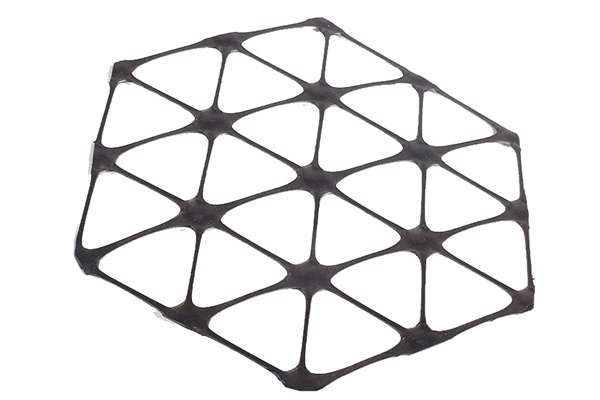
Triaxial Geogrid
Definition
A triaxial geogrid is a more advanced structure designed with triangular or radial apertures, providing multi-directional reinforcement and improved load distribution efficiency.
Key Features
- Multi-directional load distribution
- Triangular aperture structure
- Superior interlock with aggregates
- Enhanced stiffness compared to biaxial geogrids
Main Applications
- Heavy-duty road construction
- High-load industrial yards
- Rail ballast stabilization
- Ports and logistics centers
- Airport pavement systems
Advantages
- Better load dispersion in all directions
- Improved structural efficiency
- Reduced settlement risk
- Higher performance under dynamic loads
Uniaxial vs Biaxial vs Triaxial Geogrid: Key Differences
| Feature | Uniaxial Geogrid | Biaxial Geogrid | Triaxial Geogrid |
|---|---|---|---|
| Strength Direction | One direction | Two directions | Multi-directional |
| Structure Shape | Rectangular grid | Square grid | Triangular grid |
| Load Distribution | Linear reinforcement | 2D load spreading | 3D load distribution |
| Main Use | Retaining walls, slopes | Roads, subgrades | Heavy-duty pavements |
| Performance Level | High in one axis | Balanced | Highest overall |
How to Choose the Right Geogrid Type
Choosing the correct geogrid depends on your engineering requirements:
- Choose Uniaxial Geogrid if you are working on retaining walls or steep slopes where directional strength is required.
- Choose Biaxial Geogrid for general road construction and soil stabilization projects.
- Choose Triaxial Geogrid for heavy-load environments requiring maximum performance and durability.
Benefits of Using Geogrids in Construction
Regardless of type, geogrids provide several important benefits:
- Improved soil stability
- Reduced construction costs
- Lower aggregate usage
- Increased pavement lifespan
- Enhanced load distribution
- Reduced maintenance frequency
Conclusion
Uniaxial, biaxial, and triaxial geogrids each serve specific engineering purposes. While uniaxial geogrids focus on directional reinforcement, biaxial geogrids provide balanced two-way strength, and triaxial geogrids offer the highest level of multi-directional load distribution.
Selecting the right geogrid type ensures better performance, longer service life, and optimized construction costs.