
Corrugated HDPE Pipe: Everything You Need to Know
Corrugated HDPE pipe has become one of the most reliable and cost-effective solutions for modern drainage and infrastructure projects. Known for its durability, flexibility, and long service life, corrugated HDPE pipes are widely used in stormwater management, agricultural drainage, road construction, and industrial applications. As demand for strong yet lightweight piping systems grows, HDPE remains the preferred material for engineers, contractors, and project owners.
Key Takeaways
- Corrugated HDPE pipe is a lightweight yet high-strength drainage solution made from High-Density Polyethylene.
- It offers excellent corrosion resistance, making it ideal for stormwater, sewer, and agricultural use.
- Long service life of 50+ years reduces maintenance and replacement costs.
- Available in single-wall and double-wall designs for various load-bearing requirements.
- Suitable for municipal, residential, industrial, agricultural, and highway projects.
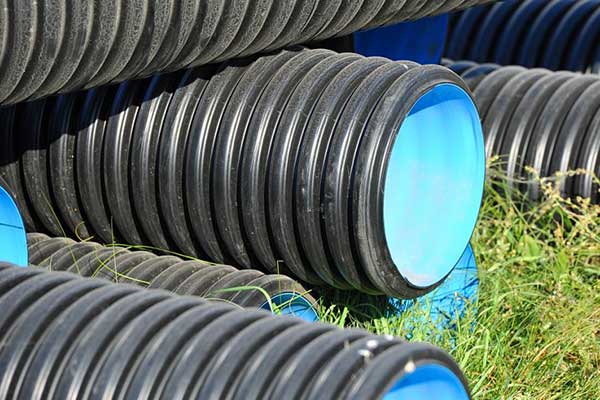
What is Corrugated HDPE Pipe?
Corrugated HDPE pipe is a drainage pipe made from High-Density Polyethylene (HDPE) and designed with a corrugated exterior for strength and a smooth or ribbed interior for efficient water flow. HDPE is a thermoplastic polymer known for its high impact resistance, low weight, and excellent chemical stability, making it ideal for underground drainage and sewer systems.
Key Features of Corrugated HDPE Pipe
1. High Strength-to-Weight Ratio
The corrugated exterior increases structural strength, allowing the pipe to withstand heavy loads such as soil pressure, traffic loads, and installation impacts.
2. Long Service Life
HDPE is corrosion-free and resistant to chemical reactions, giving the pipe a lifespan of 50 years or more when installed properly.
3. Excellent Flexibility
Unlike concrete or steel pipes, HDPE pipes can bend to adapt to uneven terrain, reducing the need for fittings and lowering installation costs.
4. Smooth Internal Surface
A smooth bore reduces friction and improves hydraulic efficiency, ensuring fast, unobstructed water flow even with minimal slope.
5. UV and Abrasion Resistance
HDPE material performs well against soil abrasion, environmental stress, and UV exposure when installed above ground temporarily.
6. Environmentally Friendly
HDPE pipes are recyclable and require less energy to manufacture compared with traditional materials.
Advantages of Corrugated HDPE Pipe
- Corrosion and Rust Resistance: Ideal for wastewater, stormwater, and chemical-rich environments.
- Lightweight for Easy Installation: Significantly lighter than concrete or metal pipes, reducing transportation and labor costs.
- Leak-Free Joint Options: Available in bell-and-spigot, snap, and welded connections, ensuring a secure and watertight system.
- Cost-Effective: Lower installation costs, fewer fittings, and long service life make HDPE pipe a more economical choice over time.
- High Impact Strength: Resists cracking and deformation, even in cold climates.
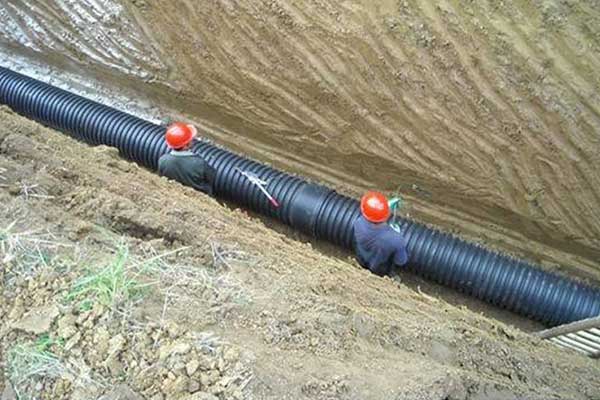
Common Applications of Corrugated HDPE Pipe
- Stormwater Drainage Systems: Widely used for municipal drainage, culverts, roadside ditches, and flood control channels.
- Agricultural Irrigation and Drainage: Ideal for farmland drainage due to its flexibility and resistance to soil chemicals.
- Road and Highway Construction: Used in culverts, underdrains, and cross-drain systems due to its ability to support heavy loads.
- Residential and Commercial Drainage: Perfect for landscape drainage, roof runoff, and foundation protection.
- Mining and Industrial Applications: Handles slurry, mine tailings, and chemical effluent due to high abrasion and chemical resistance.
- Sewer and Wastewater Systems: Suitable for gravity sewer systems where corrosion resistance is essential.
Types of Corrugated HDPE Pipe
1. Single Wall Corrugated HDPE Pipe
- Corrugated inside and outside
- Lightweight and flexible
- Commonly used for small drainage projects and irrigation
2. Double Wall Corrugated HDPE Pipe
- Corrugated exterior + smooth interior
- Higher load-bearing capacity
- Suitable for highways, municipal drainage, and industrial applications
3. Perforated HDPE Pipe
- Available in both single and double wall
- Used for subsurface drainage and water collection systems
Corrugated HDPE Pipe Sizes & Standards
Common diameters: 100mm – 1200mm (4″ to 48″), depending on region.
Standards vary by country, including:
- AASHTO M252 / M294 (US)
- ASTM F2306
- EN 13476 (Europe)
- ISO 21138
- Chinese Standard GB/T 19472.1/2
Choosing the correct standard ensures compatibility with local engineering requirements.
FAQs
When installed properly, corrugated HDPE pipes can last 50 years or more, thanks to their resistance to chemicals, abrasion, and environmental stress.
Common joint methods include bell-and-spigot joints, snap joints, couplers, and welded connections.
Single-wall: Corrugated inside & outside, very flexible, used for light-duty drainage.
Double-wall: Corrugated outside + smooth inside, stronger, used for municipal, industrial, and highway projects.
Conclusion
Corrugated HDPE pipe is a modern, durable, and cost-effective solution for drainage and water management. With superior strength, corrosion resistance, and easy installation, it is widely used across civil engineering, agriculture, industrial projects, and environmental protection.
Roadsky — Your Trusted Corrugated HDPE Pipe Manufacturer
Looking for reliable corrugated HDPE pipes for your drainage or infrastructure project? Roadsky provides high-quality, certified HDPE drainage solutions trusted by contractors, engineers, and project owners worldwide. Whether you need standard diameters, custom sizes, or technical support, our team is here to help.
Contact us today to get product specifications, pricing, and expert assistance for your project.