
Geomembrane Pond Liner: Everything You Need to Know
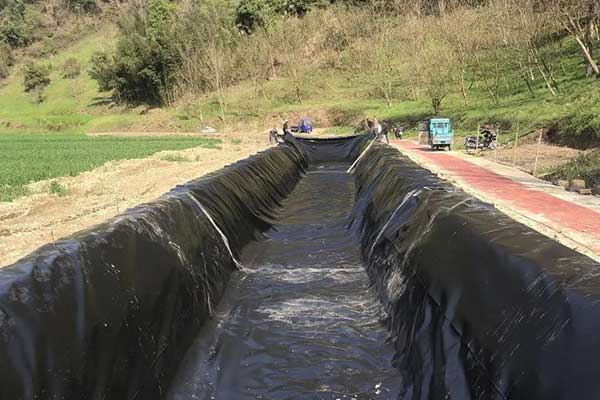
A geomembrane pond liner is a flexible, waterproof membrane used to line the bottom and sides of ponds, reservoirs, lagoons, and other water containment structures. It creates a barrier between the stored water and the surrounding soil, helping prevent water from leaking into the ground.
Geomembrane pond liners are widely used in aquaculture ponds, irrigation reservoirs, farm ponds, wastewater treatment facilities, decorative ponds, and rainwater storage systems. Compared with traditional clay lining, geomembranes can provide more consistent waterproofing while requiring relatively little maintenance when properly installed.
What is a Geomembrane Pond Liner?
A geomembrane pond liner is a thin, impermeable or very low-permeability synthetic membrane installed over prepared soil or another suitable surface. The liner acts as a waterproof barrier that keeps water contained within the pond.
Common geomembrane materials include:
- HDPE (High-Density Polyethylene)
- LLDPE (Linear Low-Density Polyethylene)
- PVC (Polyvinyl Chloride)
- EPDM (Ethylene Propylene Diene Monomer)
Among these materials, HDPE geomembrane liners are particularly popular for large ponds and reservoirs because of their chemical resistance, durability, UV resistance, and long service life.
How Does a Geomembrane Pond Liner Work?
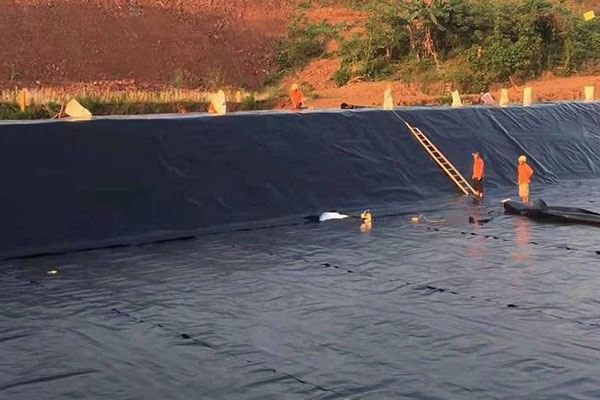
The principle is straightforward. After the pond is excavated and the surface is properly prepared, the geomembrane is placed across the bottom and side slopes.
The membrane forms a continuous waterproof layer between the water and the underlying soil. In large installations, individual geomembrane sheets are joined together using heat-welding equipment to create strong, watertight seams.
A typical installation includes:
- Excavating and shaping the pond.
- Removing sharp rocks, roots, and other objects.
- Compacting and leveling the subgrade.
- Installing a geotextile protection layer when required.
- Deploying the geomembrane liner.
- Welding or sealing membrane seams.
- Inspecting and testing the liner.
- Anchoring the liner around the pond perimeter.
- Carefully filling the pond.
Proper installation is just as important as selecting the right membrane material.
Benefits of a Geomembrane Pond Liner
1. Excellent Water Retention
The primary purpose of a pond liner is to reduce water loss caused by seepage. A properly installed geomembrane provides an effective barrier against water infiltration into the surrounding soil.
2. High Durability
High-quality geomembranes can withstand long-term exposure to water, soil conditions, temperature fluctuations, and sunlight. HDPE, for example, offers strong resistance to many chemicals and environmental conditions.
3. Flexible Installation
Geomembrane liners can be manufactured in large rolls or panels and adapted to ponds with different shapes and sizes. The material can follow properly prepared slopes and contours, making it suitable for both relatively simple and complex pond designs.
4. Chemical and Biological Resistance
Certain geomembrane materials provide strong resistance to chemicals, microorganisms, and biological degradation. This makes them suitable for applications beyond ordinary water storage, including some wastewater and agricultural containment projects.
5. Reduced Maintenance
Once correctly installed and protected, a geomembrane pond liner generally requires less maintenance than some traditional pond-lining methods. Regular inspections are still recommended, especially around exposed areas, seams, edges, and locations where mechanical damage could occur.
Types of Geomembrane Pond Liners
1. HDPE Pond Liner
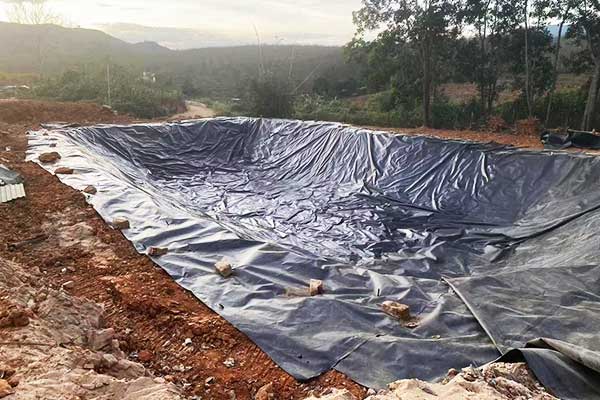
HDPE pond liners are among the most widely used options for large-scale water containment. They offer good tensile strength, puncture resistance, UV resistance, and chemical resistance.
HDPE is commonly used for:
- Agricultural ponds
- Irrigation reservoirs
- Aquaculture ponds
- Wastewater lagoons
- Water storage reservoirs
- Industrial containment ponds
2. LLDPE Pond Liner
LLDPE geomembranes are more flexible than conventional HDPE membranes. Their flexibility can make them useful for applications where the liner needs to accommodate settlement or irregular pond geometry.
3. PVC Pond Liner
PVC liners are flexible and relatively easy to handle. They can be suitable for smaller ponds and certain water containment applications, although their chemical and environmental performance should be evaluated according to the specific project requirements.
4. EPDM Pond Liner
EPDM is a synthetic rubber membrane known for its flexibility and resistance to weathering. It is commonly considered for landscaping and decorative ponds as well as certain water containment applications.
How Thick Should a Geomembrane Pond Liner Be?
There is no single thickness that is suitable for every pond.
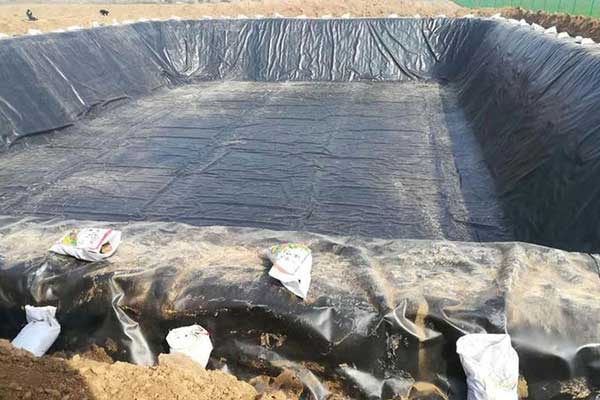
Common geomembrane thicknesses may range from approximately 0.5 mm to 3.0 mm or more, depending on the application. Larger reservoirs, difficult site conditions, heavy equipment exposure, and projects requiring greater puncture resistance may require thicker membranes.
When selecting thickness, consider:
- Pond size and depth
- Subgrade conditions
- Type and size of aggregate or soil
- Risk of puncture
- Water pressure
- Installation method
- Expected service life
- UV exposure
- Local environmental conditions
- Project specifications and applicable standards
For large engineering projects, liner thickness should be determined through project-specific design rather than choosing a thickness based solely on pond size.
Geomembrane Pond Liner vs. Clay Liner
Traditional ponds can use compacted clay as a low-permeability barrier. However, geomembranes provide a manufactured waterproof layer with more predictable physical properties.
| Feature | Geomembrane Liner | Clay Liner |
|---|---|---|
| Waterproofing | Very low permeability | Depends heavily on soil properties |
| Installation | Relatively fast when properly equipped | Requires suitable clay and compaction |
| Material consistency | Manufactured to specified properties | Depends on local soil |
| Flexibility | High for flexible membrane types | Limited |
| Quality control | Seam and membrane testing available | Primarily dependent on soil preparation |
| Suitable applications | Water storage, aquaculture, wastewater, reservoirs | Suitable sites with appropriate clay |
The best choice depends on the site, budget, design requirements, available materials, and expected service life.
Where Are Geomembrane Pond Liners Used?
Geomembrane liners are used in many water and containment applications.
Aquaculture
Fish and shrimp farms use geomembrane-lined ponds to help control water loss and create a more controlled pond environment.
Agricultural Irrigation
Farmers can use lined reservoirs to store irrigation water and reduce seepage losses.
Rainwater Storage
Geomembranes can line water storage ponds designed to collect and retain rainwater for later use.
Wastewater Treatment
Specialized geomembranes can be used in wastewater lagoons and treatment ponds to prevent potentially contaminated water from migrating into surrounding soil and groundwater.
Industrial Water Storage
Industrial facilities may use geomembrane-lined containment ponds for water storage and other applications where liquid containment is required.
Decorative and Landscape Ponds
Smaller flexible liners can also be used for garden ponds, artificial lakes, and landscape water features.
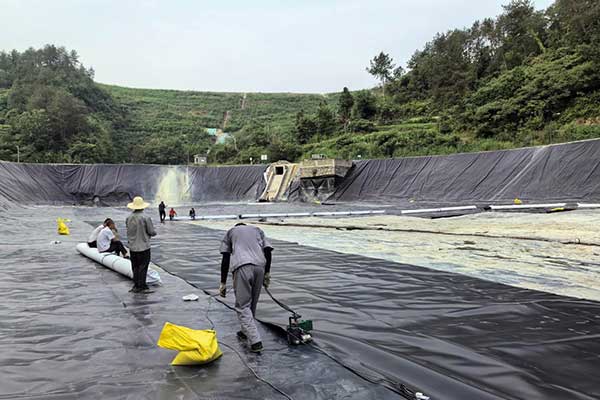
How to Install a Geomembrane Pond Liner
Proper installation is essential for long-term performance.
Step 1: Prepare the Pond
The pond should be excavated according to the engineering design. Slopes should be stable, and the bottom should be smooth and free from objects that could damage the membrane.
Step 2: Prepare the Subgrade
Remove stones, roots, debris, and other sharp objects. The surface should be compacted and reasonably smooth.
A geotextile layer may be installed beneath the geomembrane when additional protection against puncture is required.
Step 3: Deploy the Geomembrane
The membrane panels are carefully positioned across the pond. Excessive dragging should be avoided because it can damage the material or introduce unnecessary stress.
Step 4: Weld the Seams
For large HDPE and LLDPE projects, thermal fusion welding is commonly used. The welding process should be controlled according to the membrane manufacturer’s specifications and project requirements.
Step 5: Test the Seams
Welded seams should be inspected and, where applicable, tested using appropriate nondestructive or destructive testing methods.
Step 6: Anchor the Liner
The perimeter of the liner is typically secured in an anchor trench or using another engineered anchoring method to prevent movement.
Step 7: Fill the Pond
The pond should be filled carefully while monitoring the liner, seams, slopes, and anchoring system for signs of movement or damage.
Conclusion
A geomembrane pond liner is a synthetic waterproof barrier designed to minimize water seepage and provide reliable liquid containment. It can be an effective solution for agricultural ponds, aquaculture facilities, reservoirs, wastewater lagoons, industrial water storage, and landscape ponds.
Choosing the right liner involves more than selecting a membrane thickness. Material type, flexibility, chemical resistance, UV resistance, subgrade conditions, seam quality, and installation practices all affect the overall performance of the pond lining system.
For large or technically demanding projects, the geomembrane specification and installation method should be determined according to the project’s engineering requirements and local standards.