
How Long Does Geogrid Last?
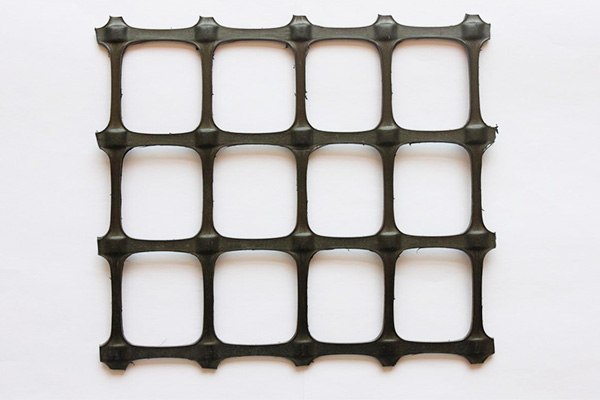
Geogrid can last anywhere from 20 to 120 years or more, depending on the material, application, loading conditions, soil environment, installation quality, and exposure to sunlight.
In most projects, geogrid is installed underground beneath aggregate, soil, asphalt, or concrete. This protects it from ultraviolet light and physical damage, allowing it to provide long-term reinforcement for driveways, roads, retaining walls, slopes, and foundations.
However, there is no single lifespan that applies to every geogrid product. A lightly loaded residential driveway and a permanent retaining wall have very different performance requirements. The right geogrid should always be selected according to the project’s design life and site conditions.
What Is the Typical Lifespan of Geogrid?
A properly selected and installed geogrid can typically provide:
- 20–50 years for many residential, landscaping, and light-duty applications
- 50–100 years for roads, parking areas, and commercial ground-stabilization projects
- 100–120 years or more for properly engineered retaining walls, reinforced slopes, and infrastructure projects
These figures are design-life ranges, not guarantees. The actual lifespan depends on whether the geogrid continues to retain sufficient strength and stiffness for its intended purpose.
What Affects How Long Geogrid Lasts?
1. Exposure to UV Light
Sunlight is one of the biggest risks to geogrid durability. Long-term ultraviolet exposure can gradually weaken polymer materials.
Most geogrid is designed to be buried shortly after installation. Once covered with aggregate, fill, or pavement layers, it is protected from direct sunlight and can perform for decades.
If a project requires exposed geogrid, choose a product specifically designed for UV resistance and follow the manufacturer’s exposure limits.
2. Geogrid Material
Geogrid is commonly made from polypropylene, polyester, or high-density polyethylene. Each material has different characteristics when exposed to long-term loads, heat, moisture, and chemicals.
The material alone does not determine service life. Product design, manufacturing quality, protective coatings, and the intended application are also important. A geogrid used for aggregate stabilization may not be suitable for reinforcing a retaining wall or steep slope.
3. Long-Term Loading and Creep
Geogrid in a retaining wall, embankment, or reinforced slope may be subjected to continuous tensile loads for many years. Over time, polymer materials can slowly stretch under sustained loading. This is known as creep.
For permanent structural applications, geogrid must be selected based on its long-term design strength—not only its short-term tensile strength. A professional design accounts for expected loads, temperature, creep, installation damage, and environmental conditions.
4. Soil Chemistry and Moisture
Soil conditions can affect geogrid performance. Factors such as pH, groundwater, salts, hydrocarbons, high temperatures, and chemical contamination may influence which material is appropriate.
Most standard soil and aggregate conditions are suitable for common geogrid products. However, projects in aggressive environments should be evaluated carefully to ensure the selected geogrid has suitable long-term chemical resistance.
5. Installation Quality
Poor installation can reduce geogrid performance before the project is complete. Common installation issues include:
- Dragging the geogrid across rough ground
- Using the wrong aggregate size
- Driving directly on uncovered geogrid
- Failing to provide the required overlap
- Creating wrinkles or loose sections
- Using insufficient aggregate cover
- Damaging the grid during compaction
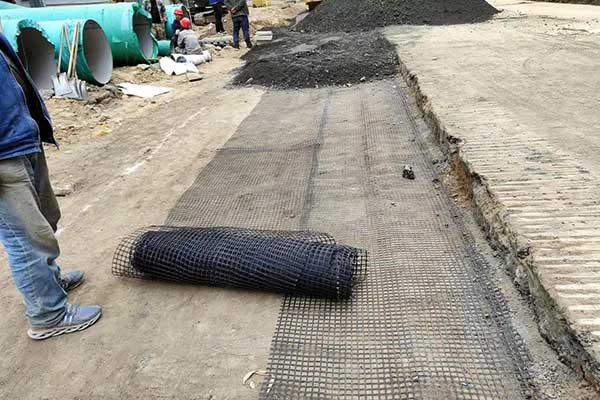
A geogrid should be laid flat over a properly prepared subgrade and covered according to the installation requirements. Aggregate should be placed carefully to avoid shifting, tearing, or overstressing the material.
6. Drainage and Water Control
Geogrid improves soil and aggregate performance, but it cannot compensate for poor drainage. Excess water can weaken the subgrade, cause erosion, wash away fill, and shorten the life of the entire system.
For driveways, roads, slopes, and retaining walls, drainage should be considered as part of the full design. Proper grading, drainage stone, filter fabrics, and water-management details can help protect the reinforced structure over the long term.
How to Maximize Geogrid Service Life
To achieve the longest possible geogrid lifespan:
- Select a geogrid designed for the specific application.
- Match the product to anticipated loads and soil conditions.
- Protect geogrid from extended UV exposure.
- Prepare and compact the subgrade properly.
- Use suitable aggregate or engineered backfill.
- Follow overlap, anchoring, and cover requirements.
- Prevent damage from construction equipment.
- Provide proper drainage and erosion control.
- Use professional engineering for walls, slopes, and major infrastructure projects.
Conclusion
Geogrid is a durable long-term ground-reinforcement solution that can last from 20 years to well over a century when correctly selected and installed. The key is to consider the complete system: the geogrid, soil, aggregate, drainage, loading, and construction quality.
For the best results, choose a geogrid that is designed for your project’s specific conditions and intended service life.