
How Does Geogrid Work? Its Functions and Applications
If you are involved in construction, roadworks, or civil engineering, you may have heard about geogrids. But what exactly are geogrids, and how do they work? In this article, we’ll break down the mechanics of geogrids, their benefits, and their most common applications in infrastructure projects.
What is a Geogrid?
A geogrid is a synthetic material made from polymers like polyester (PET), polypropylene (PP), or high-density polyethylene (HDPE). Geogrids are designed with a grid-like structure, which provides reinforcement, stabilization, and load distribution for soils and other construction materials.
Unlike traditional soil reinforcement methods, geogrids are lightweight, easy to install, and highly effective at improving the structural integrity of roads, embankments, and retaining walls.
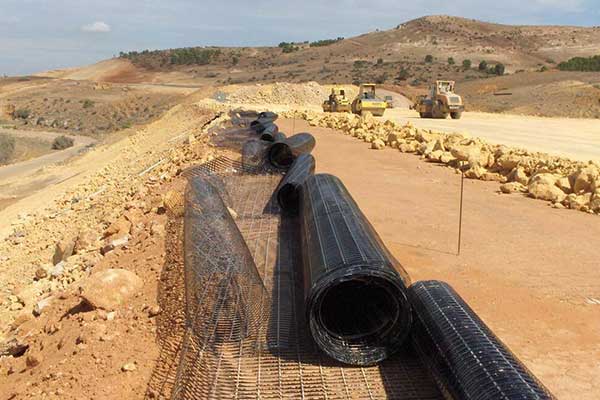
How Does Geogrid Work?
The functionality of geogrids relies on mechanical interlock and load distribution. Here’s how it works:
1. Reinforcement Through Tensile Strength
Geogrids are exceptionally strong in tension. When placed within soil layers, they help absorb and distribute loads, reducing deformation and preventing soil movement. This tensile strength is especially beneficial for supporting roads, parking lots, and heavy-duty industrial areas.
2. Soil Confinement
The openings in a geogrid allow soil particles to pass through, creating a natural interlock between the soil and the grid structure. This confinement stabilizes the soil, preventing lateral spreading and improving overall load-bearing capacity.
3. Load Distribution
When heavy loads, such as vehicles or construction machinery, pass over a geogrid-reinforced surface, the grid spreads the weight over a larger area. This reduces stress on the underlying soil, helping prevent rutting, sinking, or erosion.
4. Separation of Soil Layers
Geogrids also serve as a separation layer between different soil types. For example, placing a geogrid between a soft subgrade and gravel base prevents mixing, maintaining the structural integrity and longevity of roads and pavements.
Key Benefits of Using Geogrids
- Enhanced Load-Bearing Capacity: Geogrids significantly improve the strength of weak soils.
- Cost-Effective: Reduces the need for thick layers of high-quality fill material.
- Long-Term Durability: Resistant to chemical degradation and environmental conditions.
- Erosion Control: Helps prevent soil displacement in slopes and embankments.
- Sustainability: Reduces resource usage by stabilizing local soils instead of importing new materials.
Common Applications of Geogrids
Geogrids are versatile and used in various civil engineering and construction projects:
- Road Construction: Reinforcing asphalt and subgrade layers for highways and urban roads.
- Retaining Walls: Supporting soil behind walls to prevent collapse.
- Slope Stabilization: Strengthening embankments, riverbanks, and slopes.
- Railway Tracks: Improving trackbed stability by reinforcing ballast layers.
- Landfills: Enhancing the stability of waste containment systems.
Conclusion
Understanding how geogrids work is essential for engineers, contractors, and developers aiming to improve the longevity and safety of their projects. By providing reinforcement, soil confinement, and efficient load distribution, geogrids are a cost-effective and sustainable solution for modern civil engineering challenges.