
Application of Nonwoven Geotextiles
Nonwoven geotextiles are among the most widely used geosynthetic materials in modern civil engineering and infrastructure construction. Their versatility, durability, and cost-effectiveness make them essential for projects involving road construction, drainage systems, erosion control, landfills, railways, and coastal engineering.
As infrastructure projects continue to demand stronger ground stabilization and efficient water management, nonwoven geotextiles have become a critical solution for engineers and contractors worldwide.
What Are Nonwoven Geotextiles?
Nonwoven geotextiles are permeable synthetic fabrics manufactured through needle punching or heat bonding processes. They are typically made from polypropylene or polyester fibers and are designed to provide filtration, separation, drainage, protection, and reinforcement in soil-related applications.
Unlike woven geotextiles, nonwoven geotextiles have a felt-like structure that offers superior water permeability and flexibility.
Main Characteristics of Nonwoven Geotextiles
- High permeability
- Excellent filtration capability
- Strong puncture resistance
- Good elongation and flexibility
- Chemical and UV resistance
- Long service life
- Easy installation
These features make nonwoven geotextiles suitable for a wide range of civil engineering and environmental projects.
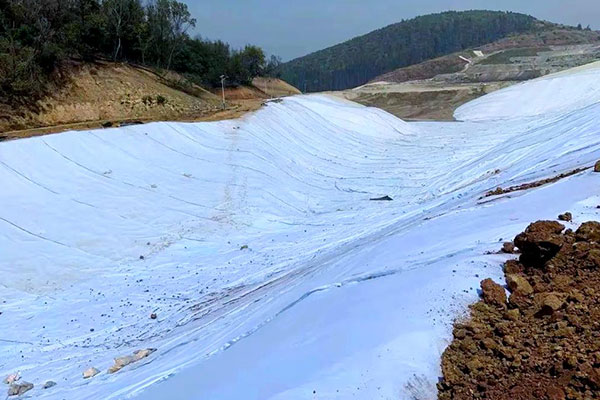
Main Applications of Nonwoven Geotextiles
1. Road Construction and Pavement Stabilization
One of the most common applications of nonwoven geotextiles is in road and highway construction.
When placed between subgrade soil and aggregate layers, the geotextile acts as a separation and stabilization layer. It prevents the mixing of soft soil with crushed stone, thereby improving road performance and extending pavement lifespan.
Benefits in Road Construction
- Reduces rutting and deformation
- Improves load distribution
- Enhances pavement durability
- Minimizes maintenance costs
- Increases bearing capacity on weak soils
2. Drainage Systems
Nonwoven geotextiles provide excellent water flow properties while retaining soil particles. This makes them highly effective in drainage applications.
They are commonly wrapped around drainage pipes or installed within drainage trenches to prevent clogging and maintain efficient water flow.
Typical Drainage Applications
- French drains
- Subsurface drainage systems
- Retaining wall drainage
- Sports field drainage
- Foundation drainage
By preventing soil migration, nonwoven geotextiles help extend the service life of drainage systems.
3. Erosion Control
Soil erosion caused by rain, flowing water, or wind can severely damage slopes, riverbanks, and coastal areas. Nonwoven geotextiles help stabilize soil surfaces and reduce erosion.
Common Erosion Control Uses
- Riverbank protection
- Slope stabilization
- Coastal protection
- Channel lining
- Embankment reinforcement
The geotextile allows water to pass through while holding soil particles in place, reducing surface erosion and improving vegetation establishment.
4. Landfill Engineering
Modern landfill systems rely heavily on nonwoven geotextiles for filtration, cushioning, and drainage.
In landfill construction, nonwoven geotextiles are often used together with geomembranes to protect waterproof liners from puncture damage caused by stones or waste materials.
Functions in Landfills
- Cushioning geomembranes
- Leachate drainage
- Gas collection systems
- Filtration layers
- Separation of waste and soil
Their chemical resistance makes them highly suitable for harsh landfill environments.
5. Railway Construction
Railway tracks require stable foundations to withstand repeated dynamic loads. Nonwoven geotextiles improve track stability by separating ballast from weak subgrade soils.
Advantages in Railway Projects
- Prevents ballast contamination
- Improves drainage efficiency
- Reduces maintenance frequency
- Enhances track stability
- Extends railway service life
They are commonly installed beneath ballast layers in both freight and passenger railway systems.
6. Retaining Walls and Reinforced Soil Structures
Nonwoven geotextiles are used behind retaining walls to improve drainage and reduce hydrostatic pressure buildup.
Without proper drainage, water accumulation can weaken retaining wall structures and increase failure risks.
Key Benefits
- Improves backfill drainage
- Prevents soil loss
- Reduces water pressure
- Enhances structural stability
This application is especially important in highway retaining walls and hillside stabilization projects.
7. Coastal and Marine Engineering
Marine environments demand durable materials capable of resisting water, salt, and erosion. Nonwoven geotextiles are widely used in coastal protection and marine infrastructure projects.
Marine Applications
- Breakwaters
- Seawalls
- Revetments
- Shoreline stabilization
- Port construction
They help prevent soil erosion while maintaining hydraulic performance under challenging environmental conditions.
8. Tunnel and Underground Construction
In tunnel engineering, nonwoven geotextiles are often combined with waterproof membranes to provide protection and drainage.
Functions in Tunnel Projects
- Membrane protection
- Water drainage
- Crack prevention
- Structural cushioning
Their flexibility allows them to adapt easily to uneven surfaces within underground structures.
Conclusion
Nonwoven geotextiles play a critical role in modern civil engineering and environmental protection projects. Their ability to provide filtration, separation, drainage, and protection makes them indispensable in road construction, railway engineering, erosion control, drainage systems, and landfill applications.
By improving soil stability, extending infrastructure lifespan, and reducing maintenance costs, nonwoven geotextiles provide a reliable and cost-effective solution for a wide range of applications.